
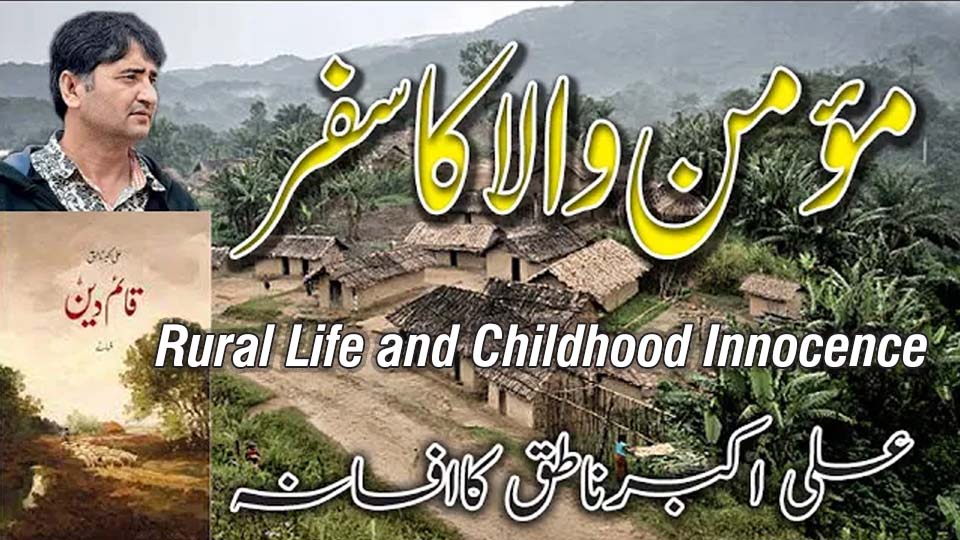
Rural life has always been associated with simplicity, purity, and the unfiltered beauty of nature. In the heart of green fields, under the shade of tall trees, and along the narrow village paths, children find a world filled with joy and wonder. Childhood innocence breathes fully in such spaces, where even the smallest details—a bird’s song, the rhythm of a horse cart, or the swaying branches of a tree—become magical experiences. Yet, beneath this charm lies a bitter reality: rural life is also marred by social conflicts, political rivalries, gender exploitation, and the manipulation of innocence for selfish ends. This duality is masterfully captured in Ali Akbar Natiq’s short story “Momin Wala Ka Safar,” where the world is viewed through a child’s eyes but layered with the harsh truths of adult society.
Childhood Innocence in a Rural Setting
The story begins with children embarking on a journey in a horse-drawn cart. For them, the clip-clop of hooves, the creaking of wooden wheels, and the cool breeze brushing past their faces create a rhythm of joy. Their little hearts pray that this ride never ends. For these children, rural life is not about responsibilities or conflicts; it is about discovery, adventure, and endless laughter. Their innocence allows them to see the world as a playground, untouched by greed, corruption, or desire. Yet, as the journey progresses, a shift in the narrative begins to reveal the more complex realities beneath the surface.
The Village Landscape and Harsh Truths
As the journey unfolds, the narrative shifts to the darker side of rural life. Thousands of egrets arrive in the village, covering the trees with their nests. At first, villagers admire the sight, but soon the birds’ droppings, noise, and foul smell turn beauty into a nuisance. Diseases spread, and in desperation, the villagers cut down branches, destroying nests and leaving countless chicks to die in agony. What once looked like a gift of nature becomes a scene of carnage. This transition mirrors how rural life can quickly move from beauty to brutality, exposing children to unsettling realities. The contrast between innocence and harshness sets the stage for the further exploitation that follows.
Innocence Exploited by Adults
In the midst of this chaos, politics and personal rivalries emerge. A woman named Naziran, holding grudges against the local chairman Lal Din, uses the dead chicks as a weapon of humiliation. Ironically, it is the children who are tasked with collecting the chicks in baskets. To them, it feels like an exciting game, a secret “mission” where they imagine themselves as heroes. They remain unaware that their innocent play is being manipulated for political revenge. Here, childhood innocence collides with the bitter realities of rural life, revealing how adults exploit purity for their own selfish motives. Moving forward, the complexity of power and desire further deepens the narrative.
Subtle Themes of Power and Desire
When Naziran confronts Lal Din with rage and insults, his calm and measured tone diffuses her anger. The story subtly suggests that what begins as enmity transforms into something else behind closed doors, hinting at Lal Din’s exploitation of the situation. This part of the narrative highlights a recurring bitter truth of rural life: power dynamics often reduce women’s dignity to bargaining chips, while children, oblivious, remain busy in their own playful worlds.
Children Lost in Their Own World
While adults are caught up in rivalries and desires, the children dive into a canal, splashing water and laughing uncontrollably. Their world remains untouched, full of mischief, joy, and freedom. To them, rural life is still magical, where birds, trees, and rivers shape endless adventures. This sharp contrast between their innocence and the adults’ corruption forms the heart of the story.
A Bitter Ending
The tale ends with irony. Naziran and the children enjoy a meal at Lal Din’s house, only to realize that the meat they had eaten was from the same egrets whose chicks were once used as weapons of revenge. The very birds that symbolized life, freedom, and innocence were turned into food, completing the cycle of exploitation and bitterness. The story concludes with a haunting image: while childhood innocence survives in laughter and play, rural life imposes its harsh truths on everyone, leaving behind a lasting impact.
Why This Story Matters
Ali Akbar Natiq’s storytelling illustrates how rural life is a space of contradictions—where beauty and cruelty, innocence and corruption, love and betrayal coexist. Momin Wala Ka Safar reflects the reality of villages not as romanticized havens but as places where human flaws are deeply interwoven into everyday life. Childhood innocence becomes both a shield and a victim: a shield that protects children from understanding the full weight of adult schemes, and a victim when that purity is exploited for others’ gains.
Final Thoughts
Rural life carries the fragrance of soil, the sound of rivers, and the laughter of children. Yet, it also hides bitter realities that test relationships, morality, and human values. Childhood innocence may turn every journey into an adventure, but stories like Momin Wala Ka Safar remind us that the darker shades of life are never too far away. This contrast is what makes rural stories both deeply moving and unforgettable, leaving readers to ponder the fragile line between innocence and corruption.
If you’re interested in reading this book, click the link below for a free download.
https://drive.google.com/file/d/1_mlTECMtHqf0A3PRAa-dQM5KDHOkAlIO/view?usp=sharing
If you’d like to listen to this book in audio format, click the CONTACT button below to get in touch with the AwazeUrdu team to order the audiobook.
You can also watch the same video on these social media platforms.
بچپن کی دنیا بڑی سادہ اور خوش رنگ ہوتی ہے۔ بچے چھوٹی چھوٹی باتوں سے خوشیاں کشید کرلیتے ہیں۔ ایک اجنبی جگہ کا سفر ان کے لیے کسی مہم سے کم نہیں ہوتا، راستے کے درخت، پرندے، کھیت، اور گھوڑے کی ٹاپ انہیں ایک ایسی دنیا میں لے جاتے ہیں جہاں صرف کھیل اور شرارتیں ہوتی ہیں۔ ان کے دل بڑوں کی ہوس اور گندگی میں لتھڑی ہوئی دنیا سے ناآشنا ہوتے ہیں۔ یہی معصومیت علی اکبر ناطق کے افسانے “مؤمن والا کا سفر” میں نظر آتی ہے، جہاں کہانی ایک بچے کی آنکھ سے سنائی گئی ہے۔
علی اکبر ناطق کا تعلق پنجاب کے ضلع اوکاڑہ کے ایک نواحی گاؤں سے ہے۔ ابتدائی تعلیم یہیں مقامی اسکولوں میں حاصل کی، پھر ایف اے گورنمنٹ کالج اوکاڑہ سے کیا جبکہ بی اے اور ایم اے بہاؤالدین زکریا یونیورسٹی سے پرائیویٹ طور پر مکمل کیے۔ عملی زندگی میں انہوں نے ایک عرصہ راج مستری کے پیشے سے وابستگی رکھی۔ یہی محنت اور کٹھن حالات ان کی تحریروں میں جھلکتے ہیں۔ ناطق کا اسلوب دیہی پس منظر کی خوشبو سے لبریز ہے اور وہ عام آدمی کی زندگی، اس کے دکھ سکھ اور چھوٹی خوشیوں کو فکشن میں حقیقت کے ساتھ پیش کرتے ہیں۔
قائم دین علی اکبر ناطق کا پہلا افسانوی مجموعہ ہے، جسے آکسفورڈ یونیورسٹی پریس نے شائع کیا اور اس پر انہیں یو بی ایل ادبی ایوارڈ سے بھی نوازا گیا۔ اس کتاب میں شامل افسانے پنجاب کے دیہی معاشرے کی اصل تصویر ہیں۔ کردار عام لوگ ہیں جو کھیت کھلیان، کبوتر بازی، مرغ لڑائی، اور میلوں ٹھیلوں میں اپنی دنیا بسا لیتے ہیں۔ ان کہانیوں میں کوئی بڑی فلسفیانہ گتھیاں یا مسلکی جھگڑے نہیں، بلکہ عام لوگوں کی چھوٹی چھوٹی باتیں اور ان کے سادہ جذبات ہی اصل رنگ بھرتے ہیں۔ انہی افسانوں میں سے ایک ہے “مؤمن والا کا سفر” جسے آوازِ اردو نے اپنی ایک ویڈیو میں بھی پڑھ کر سنایا ہے۔
اس کتاب کا درج ذیل افسانہ”مؤمن والا کاسفر” آوازِاردونے اپنی ایک ویڈیومیں پڑھ کرسنایاہے ۔یہ محض ایک بچے کے سفر کی کہانی نہیں، بلکہ اس کے اندر سیاست، نفرت، عورت کی کمزوری، اور طاقتور مرد کی چالاکی سب کچھ سمٹ آیا ہے۔ علی اکبر ناطق نے بڑی مہارت سے معصومیت اور ہوس کو ایک ہی فضا میں جوڑ دیا ہے۔ بچوں کی آنکھ سے یہ سب کسی کھیل جیسا لگتا ہے، لیکن قاری کے لیے یہ دیہی زندگی کی تلخ حقیقت ہے: جہاں سیاست اور دشمنی میں عورت کی عزت اور معصومیت بھی ایک مہرہ بن جاتی ہے۔
کہانی کی ابتدا ایک بچے کی آنکھ سے ہوتی ہے۔ تانگے پر سفر کرتے ہوئے بچے، گھوڑے کی ڈلکی چال اور اس کی ردھم میں جھولتے ہیں۔ گھوڑے کے پاؤں کی ٹاپ، تانگے کے پہیوں کی چرچراہٹ اور ہوا کے جھونکے ایک سرمست کیفیت پیدا کرتے ہیں۔ دونوں بچے — راوی اور اس کا ساتھی اختر — اپنے ننھے دلوں میں یہی دعا کرتے ہیں کہ یہ سفر کبھی ختم نہ ہو۔ ان کے لیے یہ محض راستہ نہیں، بلکہ ایک مہم ہے؛ ایک جادوئی دنیا جس میں پیپل اور شیشم کے درخت اپنی شاخیں جھکائے ان کا استقبال کرتے ہیں، پرندے ان کے ساتھ سفر کرتے ہیں اور بارش کے بعد کی فضا سب کچھ دھو ڈالتی ہے۔
گاؤں کا منظر نامہ بدلتا ہے تو کہانی کا دوسرا رُخ کھلتا ہے۔ یہ وہ وقت ہے جب ہزاروں بگلوں نے دیہات کے پیپل اور شیشم کے درختوں پر بسیرا کیا۔ ابتدا میں گاؤں والے اس منظر سے مسحور رہے، مگر جلد ہی یہ پرندے وبالِ جان بن گئے۔ ان کی بیٹ، شور اور بدبو نے ماحول کو گندہ کر ڈالا۔ بیماریاں پھوٹنے لگیں۔ لوگوں نے شاخیں کاٹ کر گھونسلے اجاڑ دیے۔ درجنوں بگلوں کے بچے زمین پر گرے اور تڑپتے تڑپتے مر گئے۔ یوں پورا گاؤں ایک مقتل کا منظر پیش کرنے لگا۔
اسی افراتفری میں نذیراں نے موقع غنیمت جانا۔ یہ عورت مخالف پارٹی کے چیئرمین لال دین سے پرانی دشمنی رکھتی تھی۔ اس نے طے کیا کہ بگلوں کے بچے لال دین کے دروازے پر ڈال کر اسے ذلیل کرے گی۔ اس مقصد کے لیے بچوں کو استعمال کیا گیا۔ معصوم راوی اور اختر بغلوں کے بچے پکڑ پکڑ کر ٹوکرے میں ڈالتے گئے، اور یہ سب ان کے لیے کھیل ہی تھا۔ انہیں نہ کسی سازش کی خبر تھی نہ کسی دشمنی کی۔ وہ صرف اس معصوم خوشی میں مگن تھے کہ وہ “کارروائی” کا حصہ ہیں اور گھوڑا تانگہ انہیں نئی نئی مناظر دکھا رہا ہے۔
لال دین کے گھر پہنچنے پر نذیراں نے سخت کلامی شروع کردی۔ وہ چیختی، چیختی گالیاں دیتی، الزام لگاتی، لیکن لال دین کے لہجے میں نرمی اور تحمل تھا۔ اس کے شانت انداز نے نذیراں کے غصے کو آہستہ آہستہ ٹھنڈا کردیا۔ پھر ایک عجیب موڑ آیا: لال دین اور نذیراں باتوں میں الجھتے ہوئے گھر کے اندر چلے گئے۔ تھوڑی دیر بعد وہ دونوں غسل کرکے باہر نکلے، حالانکہ لال دین پہلے ہی غسل کرچکا تھا۔ یہ منظر کہانی کے اندر ایک پوشیدہ اشارہ رکھتا ہے: لال دین نے موقع سے فائدہ اٹھاتے ہوئے نذیراں کو اپنی مرضی سے گھر کے اندر لے جا کر اپنی خواہش پوری کی۔ مگر کہانی اس راز کو اعلانیہ نہیں کہتی، صرف واقعات کی ترتیب اور اشاروں سے قاری کو سوچنے پر مجبور کرتی ہے۔
ادھر بچے، جو بڑے کھیل کھیل رہے تھے، نہر میں اتر گئے۔ وہ چھپاکے مارتے، پانی میں ڈبکیاں لگاتے اور ہنسی خوشی ایک الگ دنیا میں مگن رہے۔ انہیں نہ بڑوں کے منصوبوں کی خبر تھی نہ ان کی ہوس اور سازش کی۔ بچے وہیں اپنی معصوم کائنات میں تھے، جہاں سب کچھ کھیل اور ہنسی میں ڈھل جاتا ہے۔
کہانی کا اختتام کھانے پر ہوتا ہے۔ نذیراں اور بچے لال دین کی مہمان نوازی سے خوب لطف اندوز ہوتے ہیں۔ کھانے کے دوران پتہ چلتا ہے کہ گوشت بگلوں ہی کا تھا۔ یہ سن کر نذیراں کا چہرہ بجھ سا جاتا ہے۔ وہ عورت جو بگلوں کے بچوں کو بطور ہتھیار استعمال کرنا چاہتی تھی، انہی کے گوشت سے پیٹ بھر کر آئی۔ قاری کے لیے یہ منظر طنز سے بھرا ہوا ہے، گویا نذیراں اپنی ہی چال میں پھنسی۔۔
“مؤمن والا کا سفر” بچپن کی معصوم نگاہ سے بیان کی گئی ایک ایسی کہانی ہے جس میں ایک طرف سیاست، نفرت اور انتقام کی دنیا ہے، اور دوسری طرف بچوں کی شرارتوں، کھیل اور خوشیوں کی چھوٹی چھوٹی کائنات۔ علی اکبر ناطق نے نہایت سادہ مگر مؤثر زبان میں یہ دکھایا ہے کہ دیہی زندگی کی حقیقتیں کس طرح ایک ہی فضا میں بے گناہی اور گندگی کو ساتھ لیے چلتی ہیں۔ یہی حقیقت نگاری ان کے افسانوں کو اردو ادب میں ایک منفرد مقام دیتی ہے اور قاری کو دیر تک سوچنے پر مجبور کرتی ہے۔