
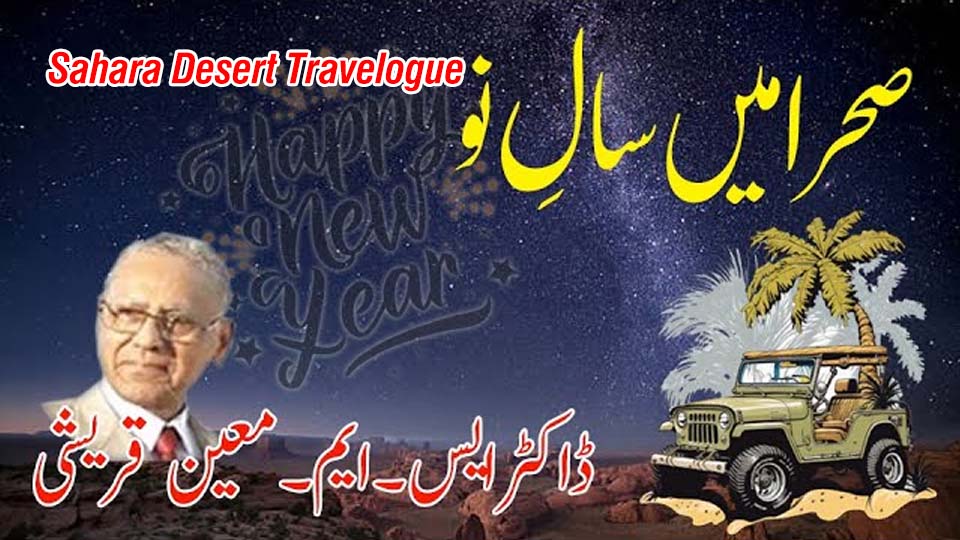
Sahara Desert Travelogue begins as a story of celebration and quickly transforms into a powerful human experience where fear, faith, and hope collide on a New Year’s night deep inside the world’s largest desert. This travelogue is not merely about dunes and destinations; it is about the fragile strength of the human spirit when confronted with nature’s vast silence.
A New Year Begins in the World’s Greatest Desert
The arrival of a new year brings joy, celebration, and renewed promises worldwide. Fireworks light up city skies, music fills public squares, and hearts quietly make resolutions for a better tomorrow. Yet, in the heart of the Sahara Desert, the New Year can unfold in a way far removed from glitter and comfort—where silence speaks louder than celebration.
This Sahara Desert Travelogue captures such a moment, when a festive journey turned into a profound lesson in humility, belief, and gratitude.
A Journey Beyond Tourism
Renowned Urdu intellectual and writer S. M. Moeen Qureshi embarked on this desert expedition with his grandson not merely as a tourist but as a thoughtful observer of life, culture, and human vulnerability. His writings are known for blending personal experience with broader historical and civilizational insights. This particular Sahara Desert Travelogue was originally published on 2 November 2020 in Daily Nawa-e-Waqt, a leading Urdu newspaper, where Moeen Qureshi’s reflective columns have long found an appreciative readership. His lucid, emotionally restrained yet intellectually rich prose enables readers not only to read an event, but to inwardly experience it.
Trapped in Sand on New Year’s Night
What began as an adventurous desert safari took an alarming turn around 9 p.m. The Jeep sank into soft sand; each attempt to restart pushed it deeper into the desert floor. Two hours passed in isolation, cold winds cutting through the darkness. Mobile phone lights flickered like fragile stars, signalling for help that never seemed to arrive.
Inside the vehicle, conversation slowly faded. The cold intensified. Silence became heavy. This Sahara Desert Travelogue reaches its emotional core here, where human confidence gives way to helplessness.
The Call That Changed Everything
Wrapped in a muffler, Moeen Qureshi stepped out into the freezing desert night and called out the Azaan. It was not a ritual—it was a cry of connection, a declaration of faith echoing across endless sand. Literature, too, became a source of strength, as poetry offered emotional shelter when words failed.
In this moment, the Sahara Desert Travelogue rises beyond geography and becomes a spiritual narrative—revealing how belief and culture sustain human courage even in the most desolate spaces.
Nature, History, and Human Greed
As the night stretched on, reflections emerged about the desert itself. Once green and fertile, the Sahara holds a deep geological memory. Experts believe it may bloom thousands of years from now. Yet human expansion continues to shrink forests, seas, and deserts alike.
Here, the Sahara Desert Travelogue subtly shifts into an environmental meditation, reminding readers that nature’s silence often mirrors humanity’s excess.
Hope Arrives Like a Miracle
Finally, salvation appeared. A vehicle slowed, drawn by the faint glow of mobile lights. Five young strangers joined hands in a relentless effort. After two and a half hours, the jeep was free. Relief, gratitude, and unspoken prayers bound everyone together on that icy night.
Fear had turned into hope—exactly as this Sahara Desert Travelogue promises in its title.
New Year Celebration in the Desert
The caravan eventually reached a luxury desert camp where New Year celebrations were underway. Music, dance, fireworks, and global tourists created a surreal contrast. Amidst noise and colour, the desert stood unchanged—silent, vast, eternal.
This contrast made the Sahara Desert Travelogue unforgettable: a reminder that joy and vulnerability often coexist.
Morning Light and Lasting Meaning
At sunrise, the same dunes that inspired terror glowed with breathtaking beauty—shades of gold, pink, and crimson. Fear dissolved into awe. The desert revealed its gentler face, teaching that perspective transforms experience.
Ultimately, this Sahara Desert Travelogue is not just a record of travel. It is a lesson in patience, faith, literature, and hope—especially meaningful at the dawn of a new year.
If you’re interested in reading this Article online, click the link below.
https://www.nawaiwaqt.com.pk/02-Nov-2020/1239817
If you’d like to listen to this book in audio format, click the CONTACT button below to get in touch with the AwazeUrdu team to order the audiobook.
You can also watch the same video on these social media platforms.
دنیا بھر میں عیسوی سال کے آغاز پر خوشیوں، تقریبات اور امیدوں کی ایک نئی لہر دوڑ جاتی ہے۔ ہر خطے، ہر تہذیب اور ہر قوم کے لوگ نئے سال کو اپنی زندگی کے ایک نئے سنگِ میل کے طور پر دیکھتے ہیں۔ کہیں آتش بازی ہوتی ہے، کہیں موسیقی اور رقص کی محفلیں سجتی ہیں، اور کہیں خاموش دعاؤں کے ساتھ دل ہی دل میں یہ عہد کیا جاتا ہے کہ آنے والا سال گزشتہ برسوں سے بہتر ہوگا۔ گویا نیا سال انسان کو یہ احساس دلاتا ہے کہ وقت کی گردش کے ساتھ خود کو بھی بدلنے اور سنوارنے کا ایک اور موقع ہاتھ آیا ہے۔
ایسے ہی ایک نئے سال کے موقع پر اردو کے معروف ادیب اور دانشور ایس ایم معین قریشی اپنے پوتے رمیز قریشی کے ساتھ افریقہ کے عظیم صحرا کی سیر پر نکلے۔ یہ محض ایک سیاحتی سفر نہ تھا بلکہ ایک ایسا تجربہ تھا جس میں خوف، امید، بے بسی، دعا، ادب اور تہذیب سب کچھ ایک ساتھ سمٹ آیا۔ اس سفر کی روداد ڈاکٹر معین قریشی نے نہایت دل نشیں انداز میں اپنے ایک مضمون میں قلم بند کی، جو2نومبر،2020ء کوروزنامہ نوائےوقت میں شائع ہوا۔اسےآوازِاردو نے 2023ءکےآخری روز اپنی ایک ویڈیو میں پڑھ کرسنایااور یوں یہ ایک تحریر سے بڑھ کر ایک زندہ تجربہ بن گئی۔
ڈاکٹر ایس ایم معین قریشی اردو ادب کا ایک معتبر نام ہیں۔ وہ نہ صرف ایک صاحبِ طرز نثر نگار ہیں بلکہ تاریخ، تہذیب، سفرنامے اور سماجی مشاہدات پر گہری نظر رکھتے ہیں۔ ان کی تحریروں میں علمی وقار کے ساتھ ساتھ ایک دردمند دل بھی دھڑکتا نظر آتا ہے۔ روزنامہ نوائے وقت جیسے معتبر اخبار میں ان کے مضامین شائع ہوتے رہے ہیں، جہاں وہ اپنے ذاتی تجربات کو وسیع تر انسانی اور تہذیبی تناظر میں پیش کرتے ہیں۔ ان کا اسلوب سادہ، رواں اور فکری گہرائی کا حامل ہے، جس کی وجہ سے قاری نہ صرف واقعہ پڑھتا ہے بلکہ اسے جیتا بھی ہے۔
ڈاکٹرصاحب کے کالم “صحرامیں اذان”کی اشاعت کا مقصد یہ بتانا تھا کہ دنیا کے سب سے بڑے ریگستان میں، نئے سال کو خوش آمدید کہنے کے لیے کس نوعیت کی تقریبات منعقد کی جاتی ہیں اور یہ سب کچھ ایک حساس دل اور بیدار ذہن پر کیا اثرات چھوڑتا ہے۔
وہ بتاتے ہیں کہ وہ اس تفریحی سفر میں رات کےنوبجے اپنے پوتے کے ساتھ افریقہ کے صحرائے اعظم میں دو گھنٹوں سے پھنسے ہوئے تھے۔ ان کی جیپ نرم ریت میں اس طرح دھنس چکی تھی کہ ہر بار اسٹارٹ کرنے پر وہ مزید نیچے بیٹھ جاتی۔ ڈرائیور جابر اور مقامی گائیڈ اُومولود پوری قوت کے ساتھ کوشش کرچکے تھے مگر اب ان کے ہاتھ پاؤں جواب دینے لگے تھے۔ آخرکار انہوں نے بیرونی مدد حاصل کرنے کا فیصلہ کیا۔ دونوں نے موبائل فون کی روشنیاں جلائیں اور گاڑی کے گرد گھوم گھوم کر دور سے آنے والی گاڑیوں کو اشارے دینے لگے، مگر ہر بار روشنی قریب آ کر کہر میں گم ہو جاتی۔
گاڑی کے اندر قریشی صاحب اور ان کا پوتا ایک دوسرے کو دلاسا دیتے رہے، حتیٰ کہ باتوں کا سہارا بھی ختم ہونے لگا۔ کاٹ کھانے والی سردی الگ آزمائش تھی۔ ایسے میں قریشی صاحب نے مفلر سے چہرہ ڈھانکا اور گاڑی سے باہر نکل کر زور سے اذان دی۔ رمیز کے سوال پر انہوں نے سلیم احمد کا شعر سنایا اور پھر قارئین کو بھی بتایا کہ ادب کیسے انسان کے حوصلے کو سہارا دیتا ہے۔ اذان دراصل ایک صدا تھی—انسان کی بے بسی میں خدا سے رابطے کی صدا۔
قریشی صاحب اس موقع پر صحرا کی وسعت، اس کی تاریخ اور جغرافیے پر بھی روشنی ڈالتے ہیں۔ وہ بتاتے ہیں کہ صحارا دنیا کا سب سے بڑا ریگستان ہے، جو کبھی سرسبز و شاداب تھا اور ماہرین کے مطابق ہزاروں سال بعد پھر ہرا بھرا ہوسکتا ہے۔ ساتھ ہی وہ انسانی حرص کی طرف اشارہ کرتے ہیں کہ کس طرح بستیاں پھیل کر صحرا کو “سُکڑنے” پر مجبور کر رہی ہیں، بالکل اسی طرح جیسے ہمارے جنگل اور سمندر سکڑ رہے ہیں۔
آخرکار اللہ کا فضل ہوا۔ ایک گاڑی قریب آئی، جس میں بیٹھے نوجوانوں نے موبائل کی روشنی دیکھ کر مدد کا فیصلہ کیا۔ وہ پانچ نوجوان قریشی صاحب کے لیے واقعی فرشتوں سے کم نہ تھے۔ ڈھائی گھنٹے کی مسلسل کوشش کے بعد جیپ ریت سے باہر آ گئی۔ شکرگزاری کے جذبات نے سب کو ایک دوسرے سے جوڑ دیا، اگرچہ سردی کے باعث قریشی صاحب خود گلے لگانے سے قاصر رہے۔
اس کے بعد قافلہ بالآخر خیمہ بستی پہنچا، جہاں لگژری ٹینٹس کسی فائیو اسٹار ہوٹل کا منظر پیش کر رہے تھے۔ آدھی رات کو بڑے خیمے میں نئے سال کی تقریب منعقد ہوئی۔ یورپی، امریکی اور آسٹریلوی سیاح موسیقی، رقص اور آتش بازی میں مصروف تھے۔ چائے کے ٹھنڈے پیالے، شور و ہنگامہ، رقصِ بسمل اور “بلیک اینڈ وائٹ” کے امتزاج نے صحرا میں ایک عجیب تضاد پیدا کر دیا۔ قریشی صاحب نے اپنی آنکھوں سے دیکھا کہ “جنگل میں منگل” کس طرح منایا جاتا ہے۔
اگلی صبح طلوعِ آفتاب دیکھنے کا ارادہ تھا مگر رات کی تھکن غالب آ گئی۔ واپسی پر دن کی روشنی میں وہی ریت کے ٹیلے، جو رات کو خوف کا باعث تھے، بے حد حسین دکھائی دینے لگے۔ سورج کی روشنی کے ساتھ ان کے رنگ بدلتے رہے—گلابی، سنہری اور پھر سرخ۔ قریشی صاحب اس منظر کو زندگی کی ایک علامت کے طور پر دیکھتے ہیں کہ ہر چیز کا حسن اپنے وقت اور زاویے سے جڑا ہوتا ہے۔
یوں یہ مضمون محض ایک سفرنامہ نہیں رہتا بلکہ ایک فکری روداد بن جاتا ہے—جس میں انسان کی بے بسی، خدا پر یقین، ادب کی طاقت اور قدرت کے حسن کا حسین امتزاج ملتا ہے۔ نئے سال کے آغاز پر صحرا میں پیش آنے والا یہ واقعہ قاری کو یہ احساس دلاتا ہے کہ زندگی کے کٹھن ترین لمحوں میں بھی امید کا چراغ بجھنے نہیں دینا چاہیے، کیونکہ
ایک پل میں وہاں سے ہم اٹھے
بیٹھنے میں جہاں زمانے لگے